At a recent Kanawha County VEX IQ Robotics Competition in Charleston, West Virginia, a technical glitch turned into one of those unforgettable moments that remind everyone why robotics is about so much more than awards.
For Curriculum Specialist Kelly Martin, who oversees all robotics and drone programs for elementary, middle, and high schools across her county, the goal this year was clear: build a culture rooted in leadership, empathy, and honorable competition. At each event, they award two recognitions, the First Responder Award and the Leadership Award, both chosen by peers, volunteers, and coaches who witness acts of integrity throughout the day.
And then the feel-good moment happened, and a powerful display of the generous spirit that defines the RECF’s robotics community.
Two elementary school-aged girls, new competitors and visibly nervous, found themselves on the field with a robot that suddenly wouldn’t function. The clock was ticking, the audience was watching, and panic was building. Kelly got on the microphone to call for help from any students who felt they could assist.
Within seconds, the magic unfolded.
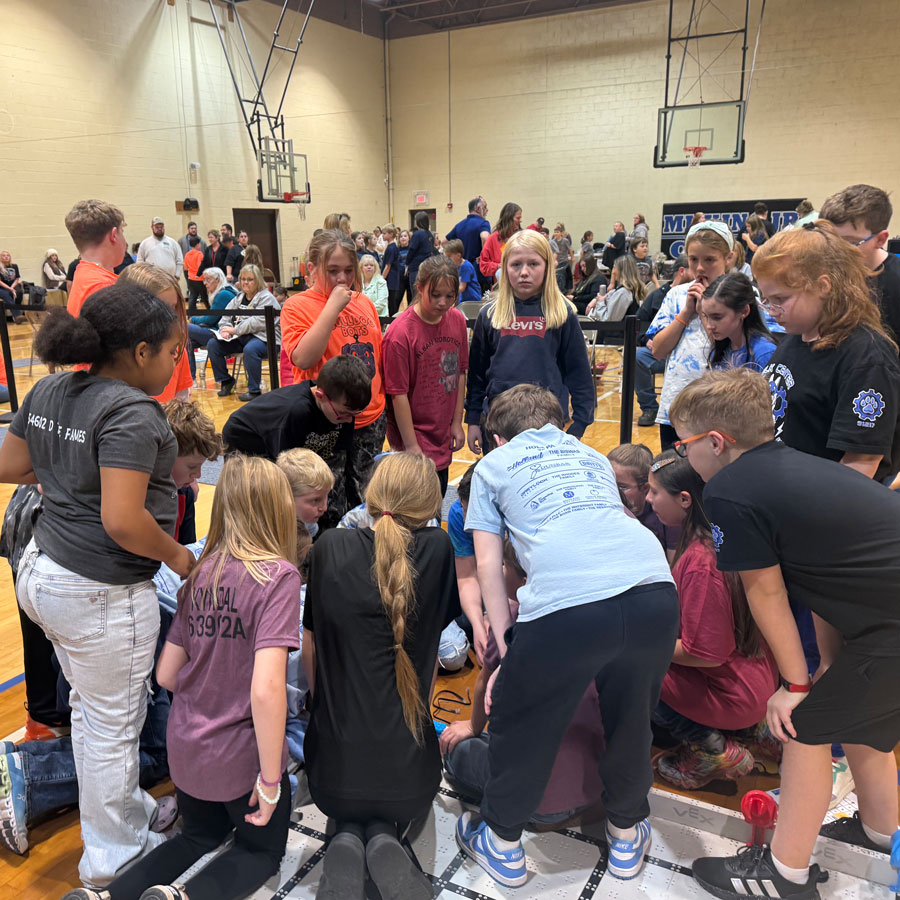
A circle of students representing a variety of schools formed around the pair, dropping to the floor beside them. Some ran back to their areas to grab spare parts. Others offered possible fixes or sat shoulder-to-shoulder, reassuring the girls, saying, “It’s okay, we’ve got time. We’ll figure this out.”
Not a single coach stepped in. They didn’t need to. The students had become the leaders Kelly and her colleagues had taught them to be. From where Kelly stood on the outside of a huddle so tight she couldn’t even see the robot, she heard the eruption of cheers when the group finally solved the issue together.
“It warms my heart,” she shared. “When kids hand over their own parts knowing they might not get them back, that’s generosity and leadership. This is what we want this program to teach.” For Kelly, the moment perfectly captured a philosophy she instilled into her students, “You don’t just want to win, you want to win honorably.”
She hopes that this mindset, learned young, extends far beyond the competition field. And judging by that circle of students who refused to let two peers fail alone, the next generation of leaders is already well on its way.