Robotics Education & Competition Foundation logo
Indigenous Robotics logo

Welcome to IndigenousRobotics.com!

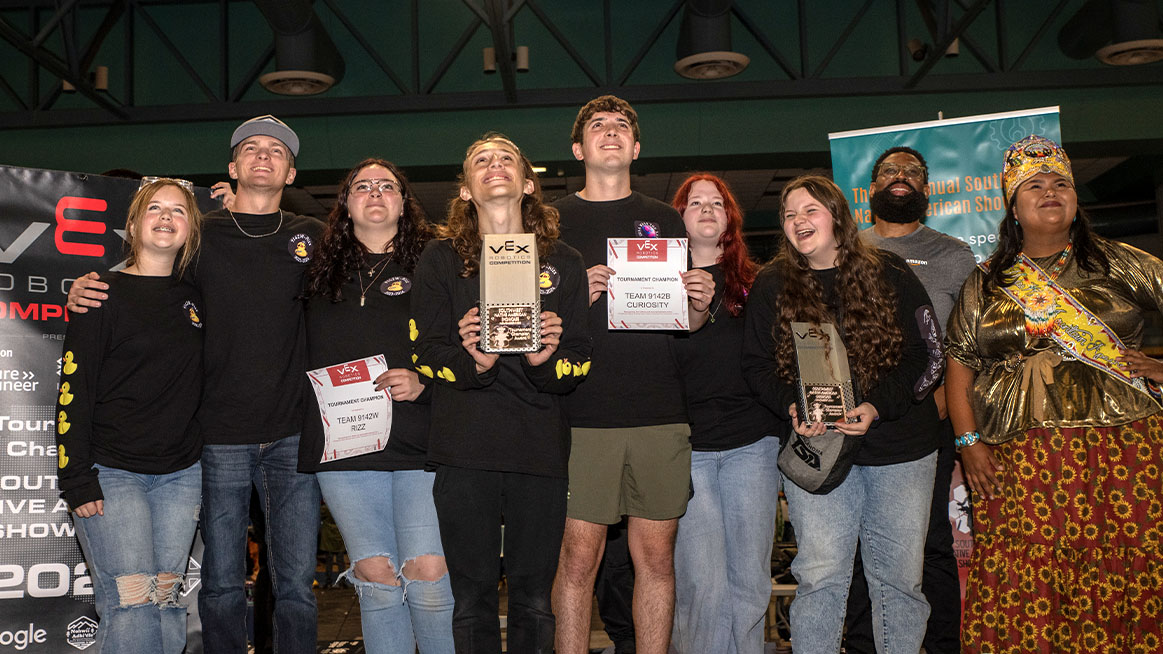
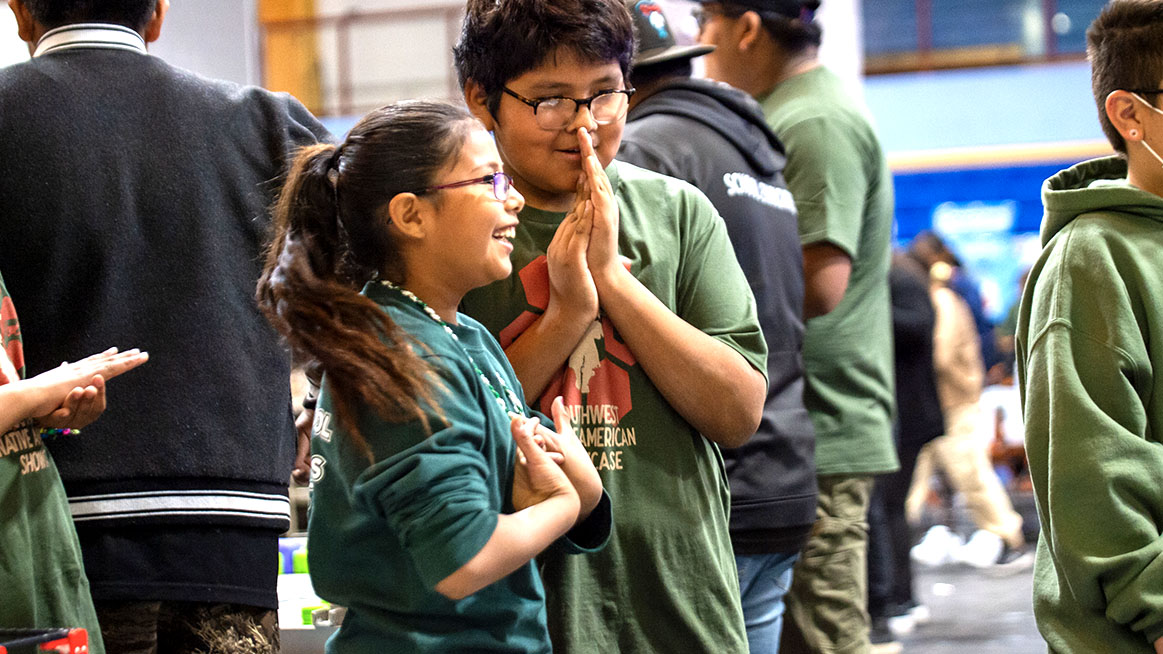
The Robotics Education and Competition Foundation has partnered with Google.org and native tribes across the U.S. to bridge a technological and educational divide that exists in many indigenous communities. Through robotics programming, we hope to empower and inspire students to see themselves as the next generation of STEM leaders, both on and off of tribal lands.

By weaving a rich native culture with modern technology and equipping students with the tools they need to thrive in the future workforce, we strive to create a more equitable society for all.
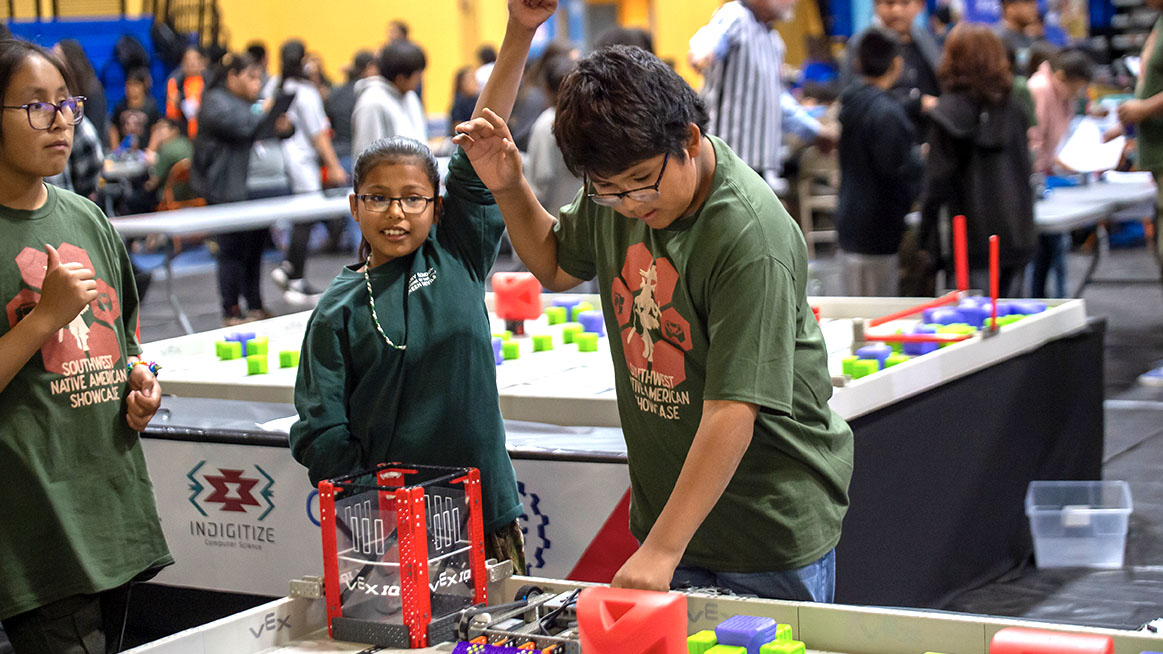
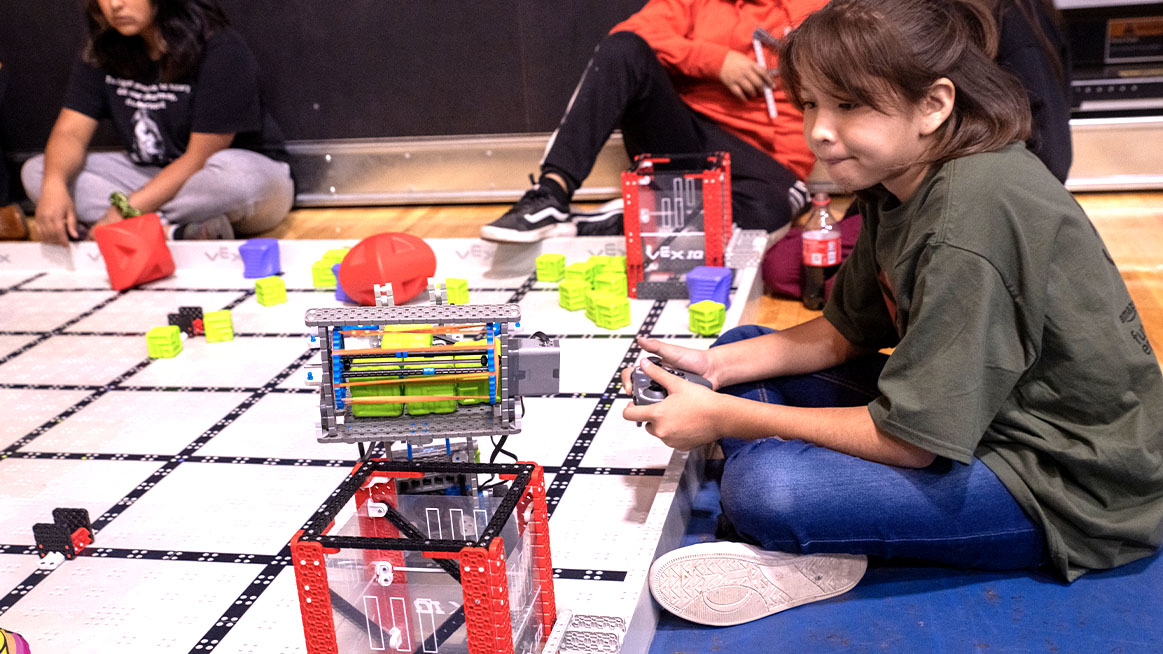
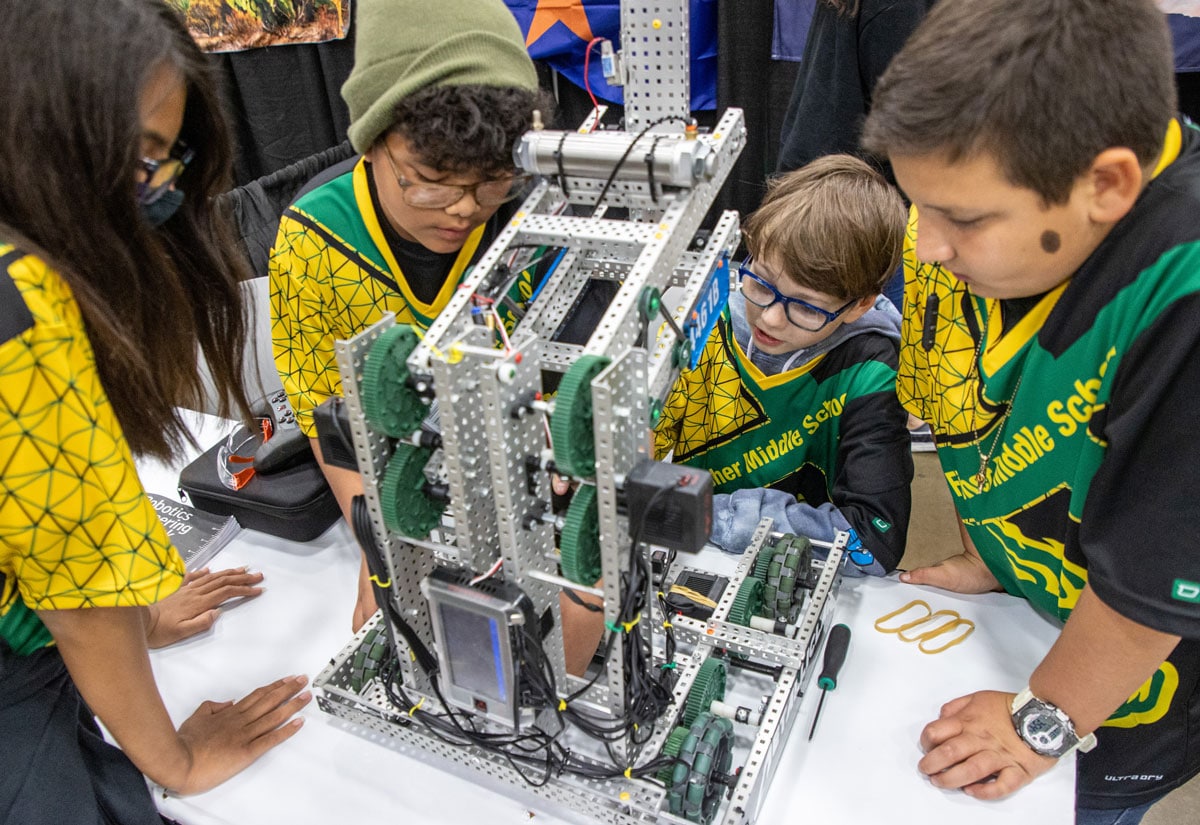
Robotics team prepares at VEX Robotics World Championship

Building Hope through Robotics

Inspiring Indigenous Youth in STEM

Discover inspiring stories from the Indigenous Robotics program, where students share their journeys of learning and growth. Watch how the program is transforming lives by providing access to cutting-edge STEM education, fostering innovation, and empowering indigenous youth to become leaders in their communities. Through hands-on experiences with robotics, coding, and drone piloting, these students are building hope and a brighter future for themselves and their tribes.

Robotics Education & Competition Foundation Mission & Vision

Mission

The Robotics Education & Competition Foundation’s global mission is to provide every educator with competition, education, and workforce readiness programs to increase student engagement in science, technology, engineering, math, and computer science.

Vision

We see a future where every student designs and innovates as part of a team, overcomes failure, perseveres, and emerges confident in their ability to meet global challenges.

Native Voices in Robotics

Moraes John Profile picture

“The Governor of New Mexico saw us on TV because we qualified for Drone Nationals, and she put funding away for us. It opened up a door to where they could use that funding to have a NASA engineer work with us during our elective hour during school. So we’ll be learning how to code with Python, the coding they use at Tesla.”

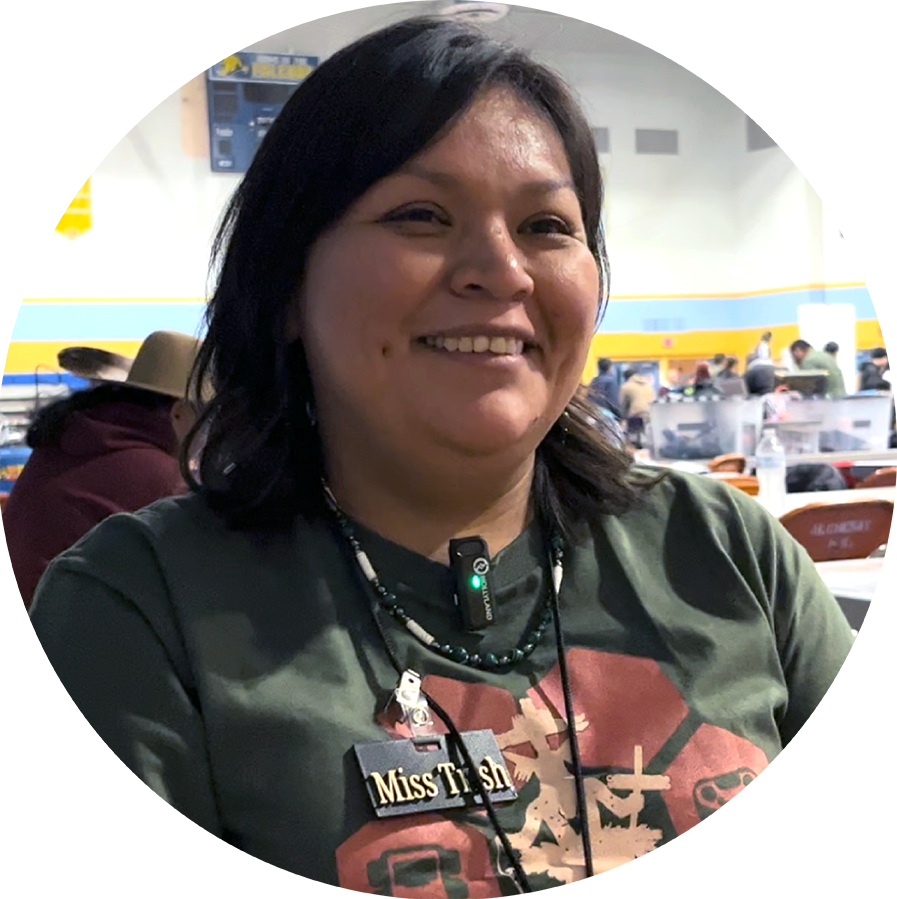
Trish Miller profile picture

“I feel like we as native people have a resiliency built within us. And by that I mean, anyone you talk to here, they’ll bring that resiliency. We just have this rubber band effect. They can stretch us so far, but we’ll come back. When students build their robots, they could fail. They’ll see that as a negative experience and they’ll be like, “Oh, I don’t want to be here anymore. I don’t want to be on this team anymore.” Yet they still come back.

Myra Mendez profile picture

“What I like about the Aerial Drone Competition is the fact that you need to have a pilot and a spotter working together. When the drone is behind the blackout curtain, the pilot is not able to see where to land, so they rely on the spotter’s voice commands. I like to see the interaction between the pilot and the spotter because it gets students talking and it gets them to be loud.”

Mario Lee profile picture

“One thing for us as far as native people is that we are really good with our hands and a lot of our kids are like that. And so when it came to building the robot, just a lot of them had that natural ability to build it, to put it together, and then to actually driving it. A lot of the kids picked it up really fast.”

Mary Jo Ondrechen profile picture

How did you become interested your career field?

As a child, my parents taught me about nature. I also had an excellent high school chemistry teacher, Mrs. Prine.

Who were your mentors?

My parents and elders, my PhD advisor, and some colleagues still today.

What advice would you give to students?

Find mentors – ask them if they would be your mentor.

Cheryl Reuss profile picture

How did you become interested your career field?

Honestly, I kind of fell into my career. When I finished my Post Bac for Secondary Ed, I was really hoping to teach High School business, instead I was matched with a middle school computer teacher, and ended up teaching K-8 Computers for 8 of the 10 years of my career. It was a blast! When I went back to school for my MBA, I worked as a Business Analyst for a few years, and like a magnet was drawn back to technology, helping to integrate a new system for the company where I worked. Most recently, I have been working as a Systems Administrator. In my spare time, I photograph wildlife and nature. I love the logic that you need to follow to understand technology and photography.

Who were your mentors?

My first real mentor was the U.S. Marine Corps. I learned that if I applied myself and worked hard, I could accomplish my goals. Next would be Sandee Holiday, a computer teacher at Royal Palm Middle School. She was my student teaching mentor, and then my colleague. She showed me I knew a lot more than I thought I did and she gave me the confidence I needed to be successful in the classroom. I have also looked to my colleagues as mentors – whether they were right or wrong, I learned from them.

What advice would you give to students?

While I was growing up, I didn’t see many people of my color in the career fields I was interested in. These days, there are so many avenues to explore in technology…math, science, and engineering. Don’t be afraid to try different avenues to find what makes you happy. Also, if you fail, don’t let that be the end: get up, try again. It is probably cliche to say, however we learn from our failures. Lastly, always ask the question why, and then ask why again. Don’t get stuck with the response, that’s how it’s always been done, because you may know a better way.

Aaron Yazzie profile picture

How did you become interested in STEM?

I always enjoyed being creative, and building things, even as a kid. I loved to jump into projects, building toy airplanes, towers, and parachutes out of things I could find around the house. I also grew up helping my dad and mom around the house, in our rural homeland. In addition to doing yard and household chores, my brothers and I helped build fences, sheds, porches, and even the foundation for our own house. I think this hands-on work with my parents helped to develop me into a design thinker, a practical planner, and a creative doer.

Who were your mentors?

My parents were my first mentors and role models. Both of them were the first in their traditional Navajo families to pursue higher education, and both ended up in a STEM field. Navajo was their first language, and they didn’t learn English until elementary school. My mother became a high school math educator, and my father a civil engineer. They always made me believe that college was going to be part of my educational path. Because of them, I always set my goals high, and challenged myself to make them happen.

What advice would you give to students?

Dream bigger! I spent so much of my time as a student and young engineer not thinking that I could achieve as much as I have. If you asked me when I was a young boy in my small hometown if my dream was to be a NASA engineer, I would have said “no”. I never understood that this kind of career, this kind of dream, was open to me too. Don’t limit your dreams to what you see in front of you. Dream big, work hard, and as you jump from one opportunity to the next, you’ll reveal your own abilities and your full potential.

Anything else you’d like to share?

I am currently working on NASA’s efforts to determine if Mars ever once hosted life. I was the lead engineer for creating and delivering drill bits for the Perseverance Rover, which landed on Mars in 2021. Perseverance will use these drill bits to grab rock core samples from an ancient lake-bed on Mars, so that we can save those samples in tubes, and eventually pick up and bring back to Earth its next Mars missions.

I am now working on the Mars Sample Return Campaign to send two more robotic missions to Mars to grab those sample tubes, and bring them back to Earth. We will study those rock samples here on Earth, and hopefully determine if Mars ever once hosted microbial life! I am so proud to be well ingrained in this NASA effort, contributing to efforts on the forefront of our scientific knowledge.

Mariah Gladstone profile picture

How did you become interested in your career field?

I initially thought that I wanted to work in environmental engineering, which is what I studied in undergrad. However, when I moved back home after college, I realized that there was an urgent need to build food sovereignty in my community. Reconnecting with our traditional foods is essential to both our own mind and body health but also to the health of the land.

I started an online cooking show called Indigikitchen to reteach this information using digital media. I was fortunate to have an opportunity to return to school through the Sloan Indigenous Graduate Partnership where I studied Environmental Science and was able to blend food systems work with Indigenous ecology. 

Who were your mentors?

Robin Kimmerer (Citizen Band Potawatomi) for her ecological wisdom, Valerie Segrest (Muckleshoot) for her nutritional brilliance, Janie Hipp (Chickasaw) for her sovereignty advocacy and youth involvement.

What advice would you give to students?

Get comfortable being uncomfortable. Don’t choose between your hobbies but instead, find ways that they intersect. Always be willing to learn new skills or even old skills in new ways. 

Contact

Whether you're looking to learn more about the competition, need assistance with registration, or have any questions, we're here to help. Our team is dedicated to providing you with the information and support you need to make your experience as smooth and exciting as possible.

4th Annual Southwest Native American Showcase

2025-2026 Signature Event Updates

  1. An Event Partner wanting to apply to host a Signature Event must have hosted events for at least 2 seasons prior to applying. 
  2. Signature Events must use the officially branded award banners for the Excellence Award and Tournament/Teamwork Champions Award.
  3. When hanging field skirts the VEX Robotics logo/brand name can not be covered up on the competition fields.
  4. VEX V5 Robotics Competition Signature Events may have regional capacity and max per organization restrictions lifted 8 weeks before the event if the event is not full (similar to the process already in place for VEX IQ Robotics Competition Signature Events).
  5. Minimum pit size reduced to 8’x 8’ instead of 10’x10’.
  6. Beginning in the 2025-2026 season, the REC Foundation will collect $10 instead of $5 per team registration on all Signature Events. This is to help offset travel costs for REC Foundation staff to support these larger events.

2025-2026 Signature Event Application Reminders

  1. Existing Signature Events only need to complete the Final Application (due by March 31, 2025)
  2. New Signature Event concepts will need to complete the Initial Proposal by January 31, 2025 and if approved, complete the Final Application by March 31, 2025.
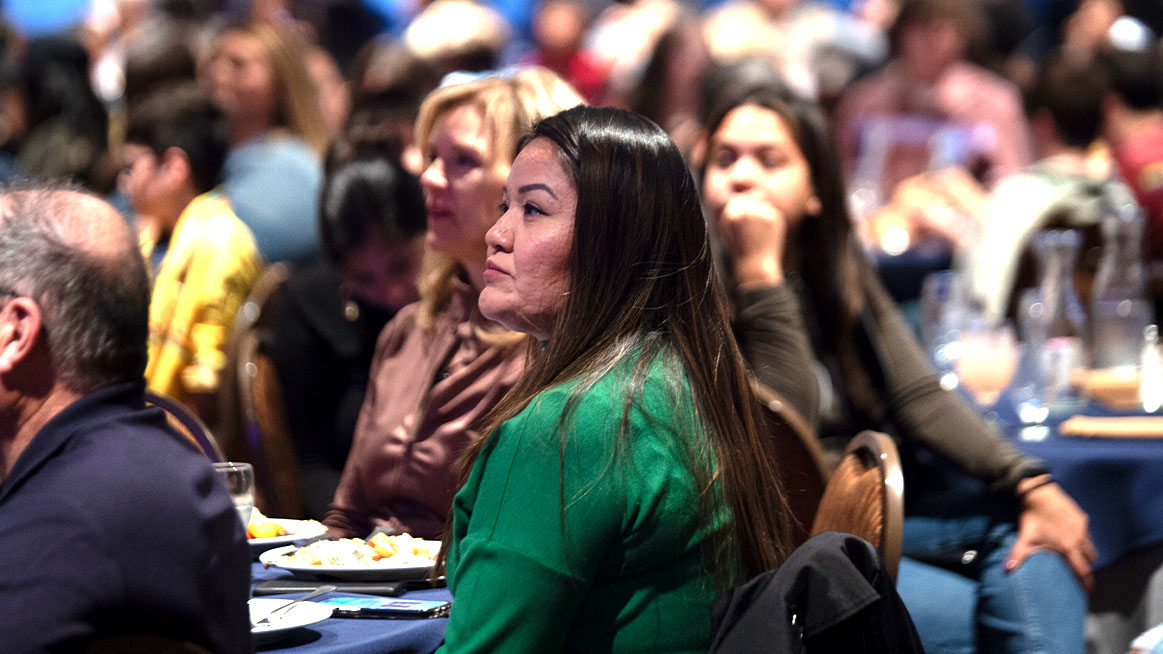
Crowd watches the Signature Event in Minnesota's Mall of America
VEX Robotics World Championship logo