
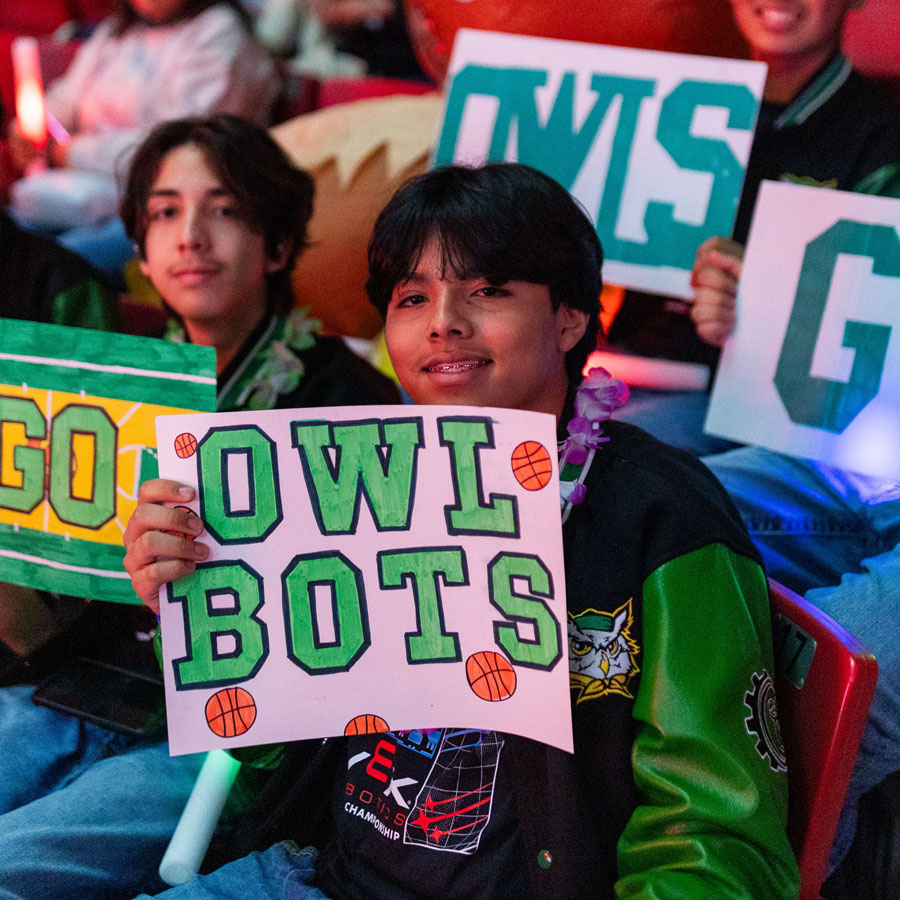
For Patricia and Omar Cortez, Dallas ISD educators and coaches, robotics and drones mean much more than competing.
They leverage robotics and drone programs from the RECF to help students gain confidence, develop skills, and imagine new possibilities for their futures.
On their Texas campus, robotics started as an after-school competition but has become a schoolwide learning path. Omar teaches robotics and drones to students in grades 6 to 8, while Patricia leads robotics instruction for 4th and 5th graders as part of the elementary specials rotation, along with classes like gym and music.
They expanded the programs after seeing the positive impact on students.
“This is more than just a competition,” Patricia said. “This is helping our students gain problem-solving skills, communication skills, and all sorts of soft skills that they’re going to take not just into their other courses, but into life in general.”
Omar first noticed the impact on students who were quiet or unsure. Robotics encouraged them to talk with teammates, judges, and coaches. Over time, these students started raising their hands in class, speaking up for themselves, and taking on leadership roles at school.
One student who used to be very introverted became the go-to robotics expert among his classmates. He watched robotics videos, brought fresh ideas to practice, and soon younger students looked up to him. Now, he comes back to help with summer camps and teaches current students about engineering notebooks.
For another student, drones became the turning point. She struggled academically and was quiet in class, but Omar noticed her natural talent during hands-on activities. Once she joined the drone team, she began to grow. She improved academically, gained confidence, and now plans to attend a school focused on science, engineering, and math.
“Now, we can’t get her to be quiet,” Omar joked.
These transformations are why both educators keep investing their time in robotics and drones. Patricia has coached robotics for about 10 years and drones for two. Omar has coached robotics for seven years, taught robotics for six, and worked with drones for about three years.
While robotics offers deep opportunities in engineering, design, coding, and problem-solving, Omar sees drones as an especially accessible entry point for new students and teams.
With drones, all teams start with the same equipment. Success depends on practice, piloting, coding, communication, and strategy. This is important for schools or groups that do not have many resources.
“It goes back to equity,” Patricia said. “It’s the knowledge, the engineering, plus the financial aspect. It’s definitely an easy entry point for starting teams.”
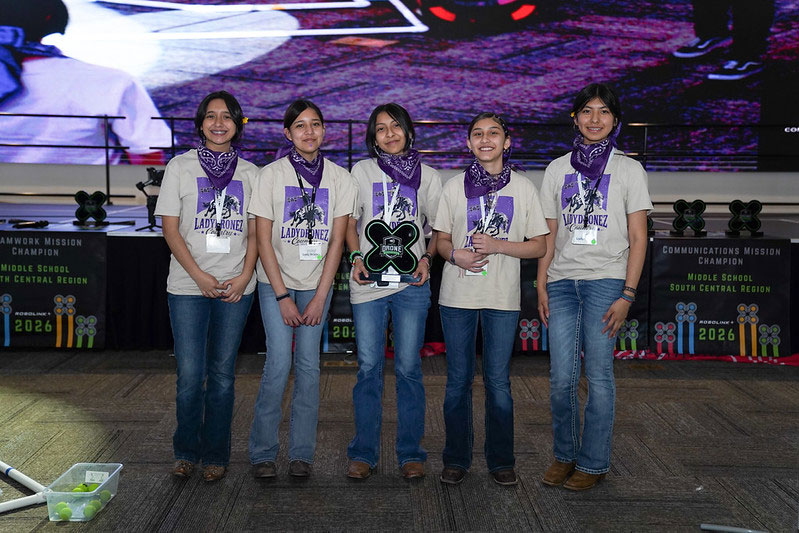
Drones have also become a powerful way to engage more girls in STEM. Patricia’s all-girls robotics team, the LadyBots, and all-girls drone team, the LadyDronez, are helping lead that effort.
For the past three years, they have hosted Girls in Gears, a student-led workshop that introduces girls from across the district to STEM. The event started with about 80 girls and grew to 100 this year, with drone activities included for the first time.
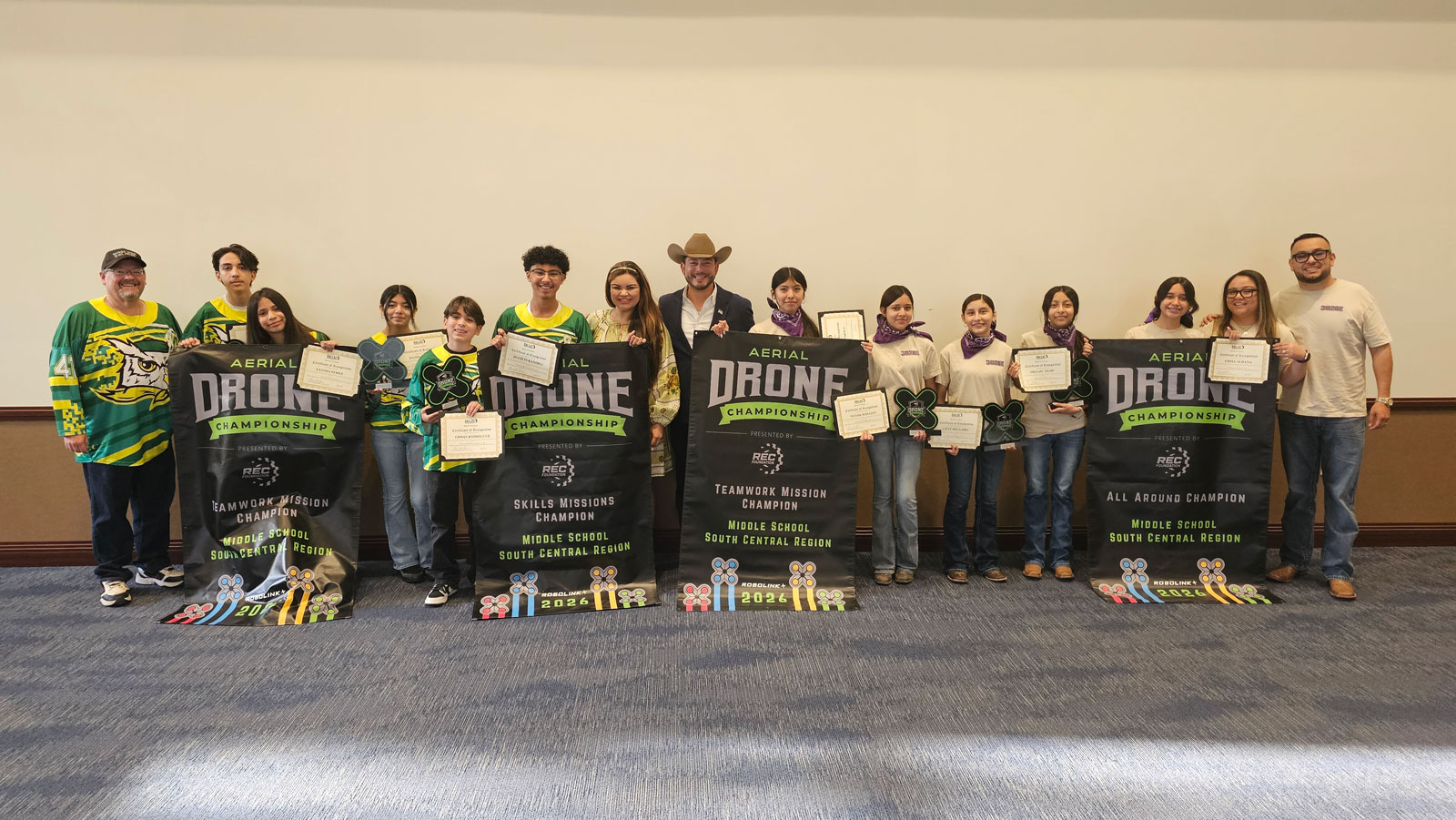
The LadyDronez are building their own legacy, too. This year, they won the All-Around Champion Award at the South Central Championship and continue to show younger girls that they belong in STEM spaces.
The career connections are also becoming more visible. Omar earned his Part 107 drone pilot license to show students what is possible. As part of a drone career-readiness challenge, students interviewed a professional who uses drones to inspect offshore oil rigs. When they learned his boss was a woman, the girls’ eyes lit up.
Students are also seeing drones used in entertainment, logistics, inspections, agriculture, and public safety. One student was inspired after seeing a holiday drone show in Dallas and decided she wanted to create drone shows as a career.
For Patricia and Omar, the greatest return on investment is not a trophy. It is seeing students dream bigger.
Former students have earned full rides to some of the nation’s most prestigious STEM institutions, including Caltech and MIT. One student, now attending Caltech, helped start a robotics team at his high school after realizing they didn’t have one. He advocated for the program, found support, and helped create a pathway for younger students to continue in robotics.
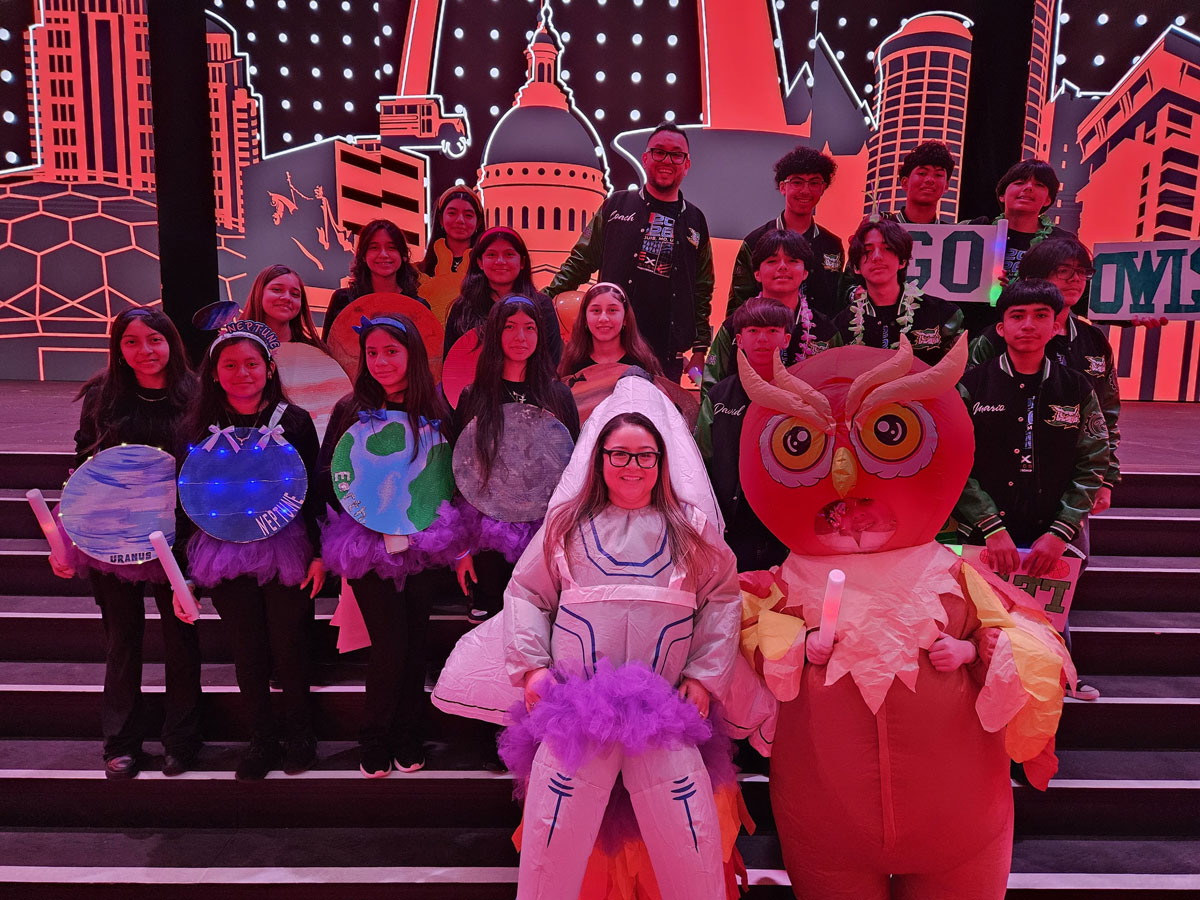
For Omar, the impact of those moments is hard to put into words.
“When I got that text message, ‘You were the first one to ever dream this big of me,’ that one just hit,” Omar said.
Their advice to students and educators considering robotics or drones is simple: start. “The worst that can happen is you fail,” Patricia said. “But within failure, you’re always learning something new.”
For educators, she added, the impact goes far beyond the classroom. Students leave with technical skills, communication skills, resilience, leadership, and confidence.
For Omar, it all comes back to self-advocacy. Once students find their voice, they start using it everywhere, including in competitions, class, leadership roles, and later in college and in their careers. “If they continue to find their voice throughout high school, college, and into the workforce,” Patricia said, “they’re going to be unstoppable.”